
Dyslexia Assessments by Certified Specialists
✔ Conducted by Certified Academic Language Therapists
✔ Evidence-based assessment tools
✔ In-person and virtual options available
Why Dyslexia Testing Matters
Dyslexia is a neurological, language-based learning difference, not a lack of intelligence, effort, or motivation. Many children with dyslexia work twice as hard just to keep up, often feeling frustrated, discouraged, or misunderstood.
Without proper testing:
Reading struggles may be misidentified or overlooked
Children may receive generic tutoring that doesn’t address the root issue
Confidence and self-esteem can suffer over time
A comprehensive dyslexia assessment provides clarity, allowing families and educators to stop guessing and start supporting the child in meaningful, effective ways.
Comprehensive. Compassionate. Clinically grounded.
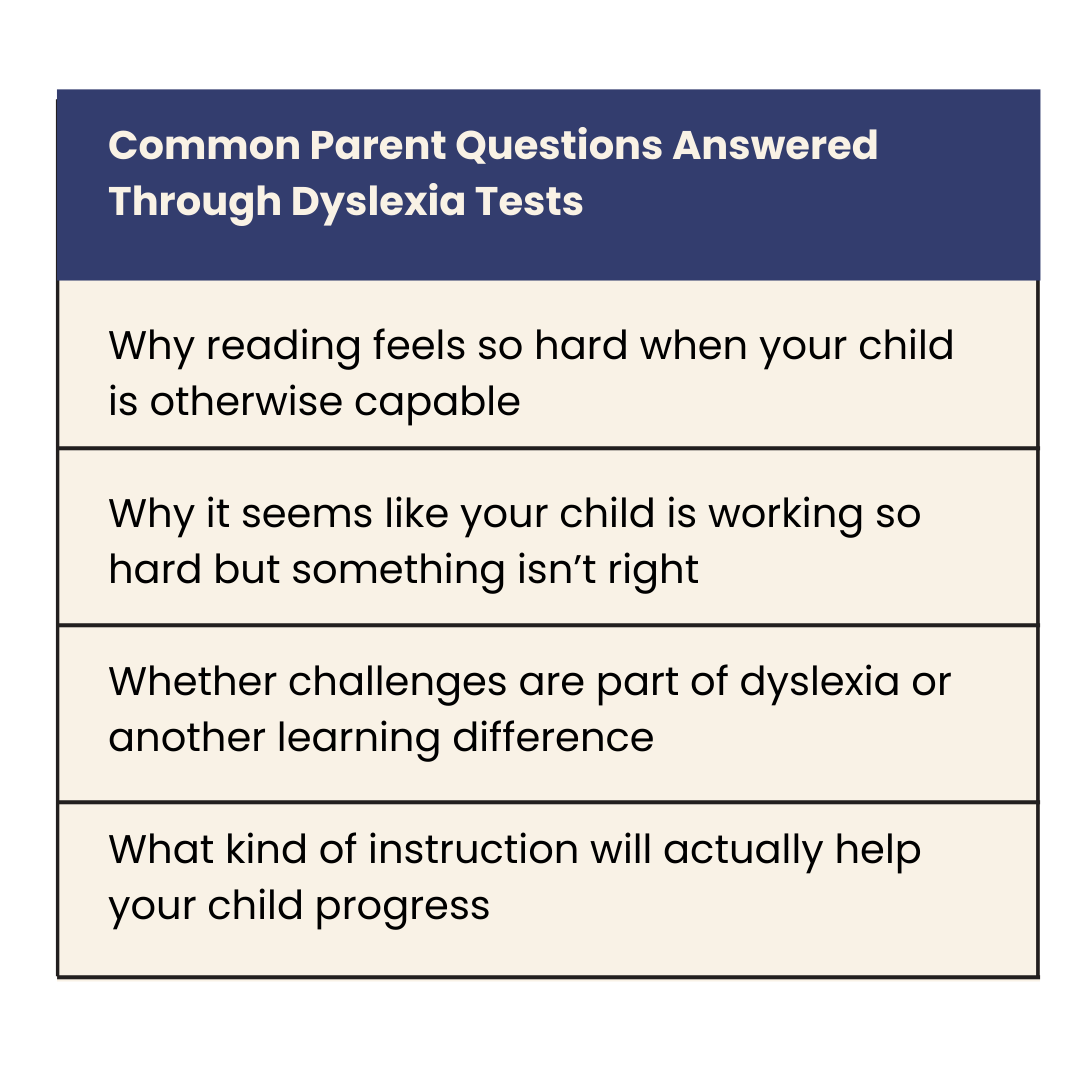
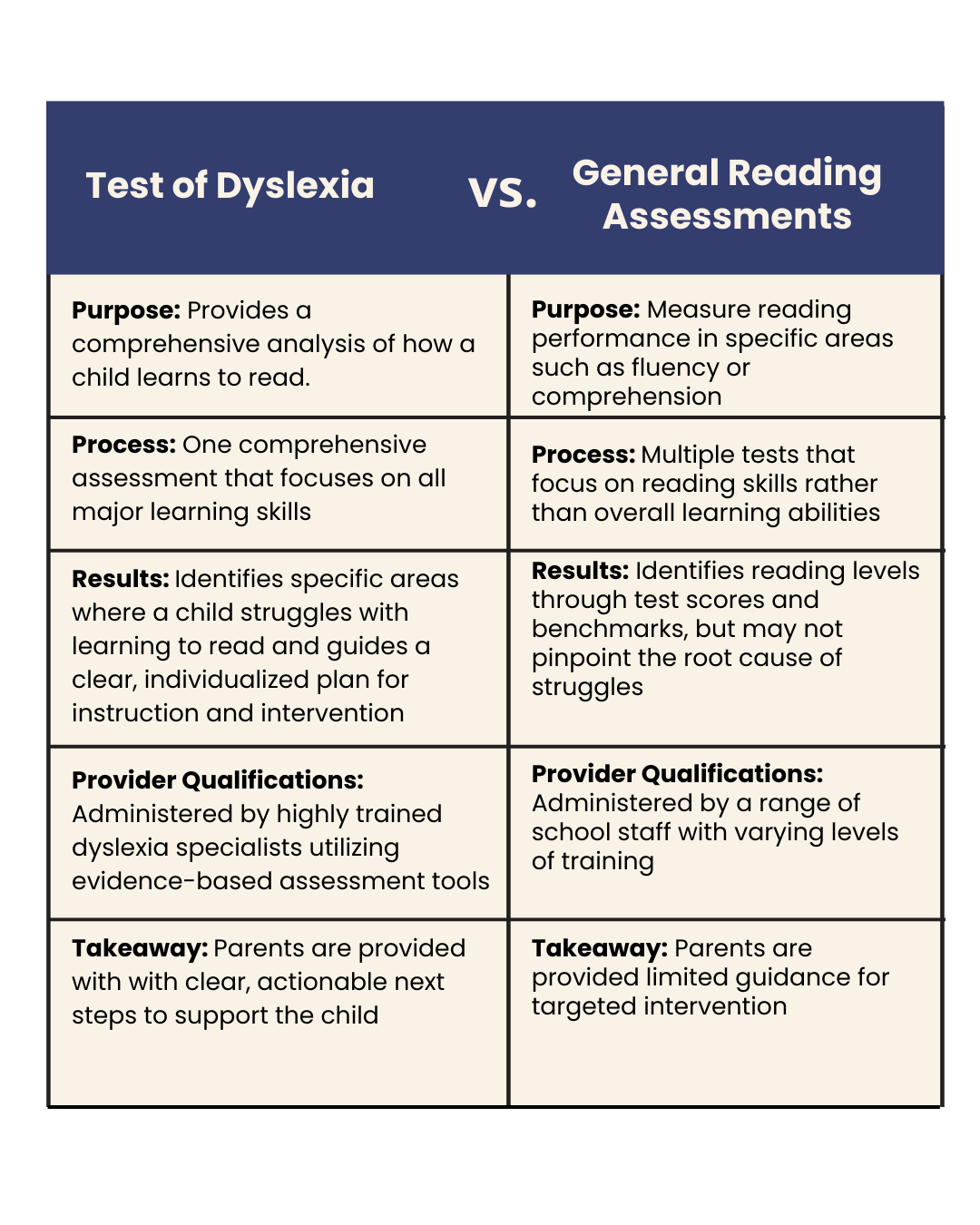
Our dyslexia assessments go beyond surface-level screening.
At Hoover Learning Group, we take a thoughtful, supportive approach to testing because we know this process can feel overwhelming.
Our dyslexia testing is:
✔ Conducted by highly trained dyslexia specialists
✔ Rooted in evidence-based assessment tools
✔ Designed to identify both strengths and challenges
✔ Focused on understanding how your child learns
✔ Paired with clear, actionable recommendations
You’ll never be left to interpret results on your own. We guide you through each finding and explain what it means for your child’s learning and next steps.

Who Should Consider Dyslexia Testing?
Dyslexia testing may be helpful if your child:
✔ Struggles with reading accuracy, fluency, or comprehension
✔ Has difficulty with spelling or written expression
✔ Avoids reading or shows frustration with schoolwork
✔ Is bright and capable but underperforming academically
✔ Has a family history of dyslexia or learning differences
Early identification can make a powerful difference, but testing is valuable at any age when concerns for reading arise.
-
Hoover Learning Group offers Dyslexia Screening services to public and private schools as well as openly to the community as part of a Dyslexia awareness outreach initiative.
Dyslexia screenings provide quick, affordable insight into whether your child shows indicators of dyslexia. In about 30-45 minutes and for just $50, our CALTs assess early reading markers and provide prompt feedback about whether comprehensive evaluation may be warranted.
This low barrier screening is ideal for parents who suspect dyslexia but want preliminary information before a more fulsome assessment.
-
Measures early reading skills, the most prominent indicator of dyslexia in young children. It includes nine tests and contains composite scores in reading, spelling, linguistic processing, and vocabulary. This assessment is designed for students in kindergarten and first grade.
What you’ll learn:
Whether your child shows indicators of dyslexia
Current reading skill levels compared to grade expectations
Specific areas of strength and challenge
Recommended next steps for intervention
-
For students from early elementary through adulthood. The 23 tests in this assessment provide scores in composite areas that include reading, spelling, linguistic processing, and vocabulary and provide a further understanding of specific skills and abilities closely connected to dyslexia.
The comprehensive assessment will provide additional insight into orthographic processing, comprehension, fluency, and reasoning.
Dyslexia Assessment Options
Using results to move forward.
-
Step 1: Program Enrollment
If dyslexia therapy is recommended, we’ll work with you to select a therapist whose schedule, location, and expertise align with your child’s needs. Most students begin therapy within one week of assessment.
-
Step 2: Customized Intervention
Your therapist will use assessment data to design a therapeutic program to meet your child’s specific challenges while building on their strengths.
-
Step 3: Progress Monitoring
We conduct benchmark assessments every 2-3 months to track progress, celebrate gains, and adjust instruction to ensure your child stays on track toward reading independence.